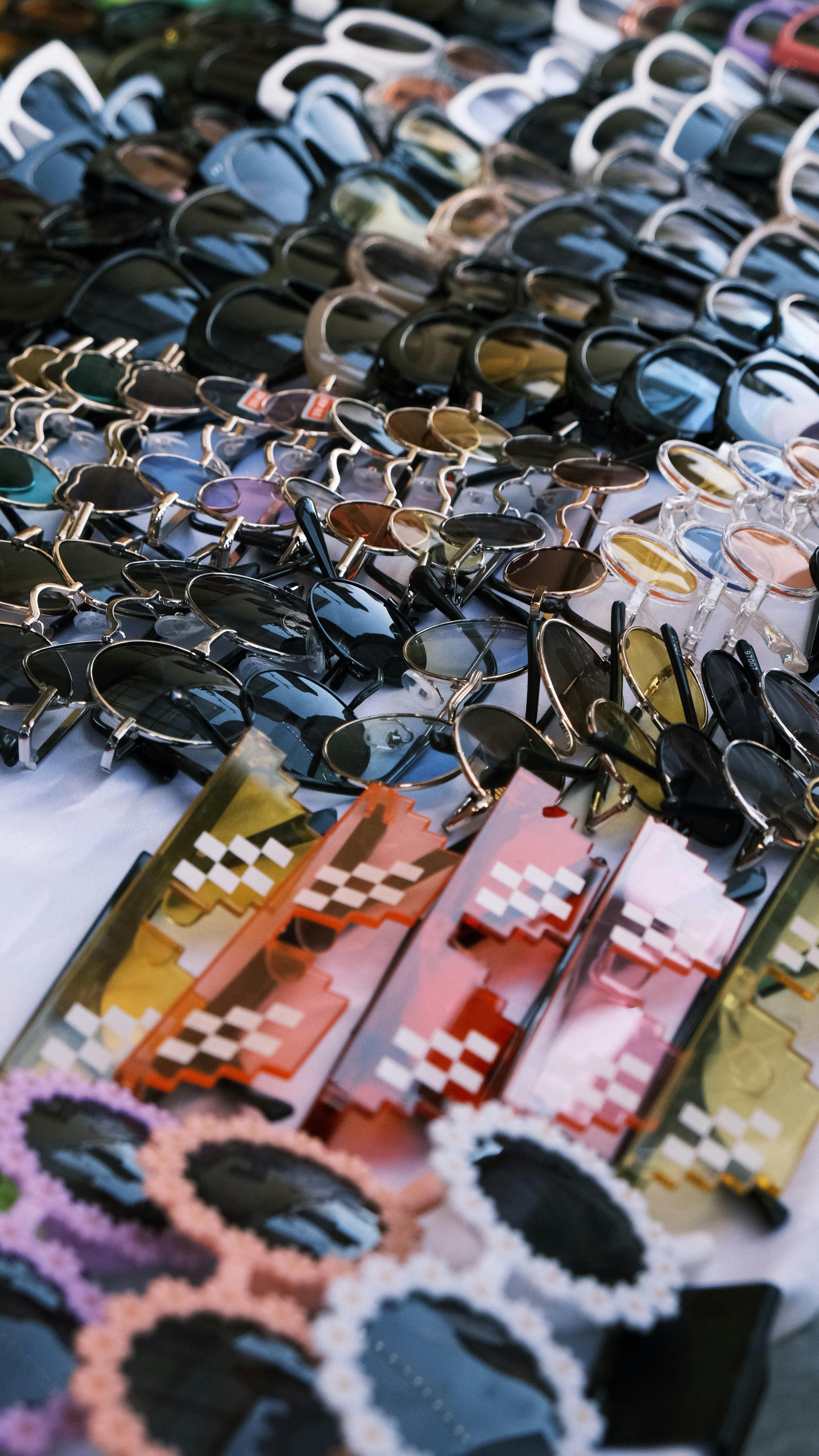
Color choice is where most people freeze up when buying sunglasses. You find a shape you like, the fit feels right, and then you’re staring at eight colorways wondering which one won’t clash with half your wardrobe.
Here’s a shortcut. These five frame colors are essentially universal. They work across skin tones, outfit palettes, and seasons. If you’re buying your first quality pair or want something you can wear daily without thinking about it, start here.
Classic black
The obvious choice, and obvious for a reason. Black frames disappear into any outfit. They read as sharp with a suit, cool with streetwear, and effortless with a white t-shirt. Black works on every skin tone without exception because it creates contrast rather than competing with your complexion.
The only risk with black is boredom. If you already own black frames and want something that feels like a step without being a leap, look at the next option.
Dark tortoiseshell
Tortoiseshell is the single most flattering frame color for the widest range of people. The warm amber and brown tones complement warm skin tones naturally, but the darker variations (more brown than honey) also work beautifully on cool-toned skin.
What makes tortoiseshell special is that it has visual texture. Unlike a solid color, the pattern creates depth and interest without demanding attention. It’s a frame color that makes people say “I like your sunglasses” without being able to articulate why. It just looks right.
Matte grey
Grey frames exist in a space between black and transparent. They’re softer than black, more modern than tortoiseshell, and read as understated rather than plain. Matte grey in particular avoids the clinical feel of glossy grey and instead feels considered and intentional.
This is the frame color for people who want something neutral but don’t want to default to black. It pairs especially well with cool-toned wardrobes, denim, and earth tones.
Warm olive or forest green
This is the dark horse recommendation. A deep olive or forest green frame reads as a neutral to most people’s eyes but carries significantly more character than black or grey. It pairs beautifully with earth tones, navy, cream, and even pastels.
Green frames also tend to complement a wider range of skin tones than you’d expect. The warmth of olive grounds the color, preventing it from looking clinical. Brands like VEIL Collectives and others in the independent space have been leaning into this color family because it signals taste without shouting for attention.
Clear or translucent
Translucent frames let your skin tone show through, which means they adapt to your face rather than sitting on top of it. They read as modern, light, and slightly fashion-forward without being aggressive. A clear or smoky translucent frame is one of the most versatile options available because it genuinely goes with everything.
The trade-off is that translucent frames show fingerprints and smudges more readily than solid colors. Keep a microfiber cloth handy.
The rule behind the rule
Notice that all five of these colors share a quality: they support rather than compete. The best frame colors are the ones that make your face look better, not the ones that make people look at the frames. When in doubt, always choose the frame color that makes you see yourself first and the glasses second.