The square face shape — defined by a broad forehead, wide cheekbones, and a strong jawline where all three measurements are roughly equal — is one of the most common face shapes and one of the most consistently misguided in standard style advice.
Most guides say: wear round frames to soften the angles. This is partially correct and frequently oversimplified.
Why the round frame advice exists
The logic is contrast theory. Angular face features plus angular frames amplifies the angularity. Angular features plus curved frames creates balance through opposition. Round or oval frames introduce curves that soften the overall impression.
This works. It is not wrong. But it produces a narrow recommendation that ignores a significant amount of what actually looks good on square faces.
What the round frame advice misses
Strong facial structure can carry strong frame geometry. A square face with prominent features is not a problem to be solved — it is a structural asset that many frames cannot handle but some frames absolutely can.
Bold rectangular frames on a square face, when sized correctly, read as architectural rather than awkward. The matching angularity creates a coherent, confident statement. This is why square-jawed faces dominate eyewear advertising. The structure holds the frame.
The key variable is not shape — it is proportion. A frame that is correctly proportioned to the face works. A frame that overwhelms it or disappears into it does not.
Shapes that reliably work
Round and oval: The standard recommendation, valid. Particularly effective when the frame is sized to sit within the width of the cheekbones rather than extending past them.
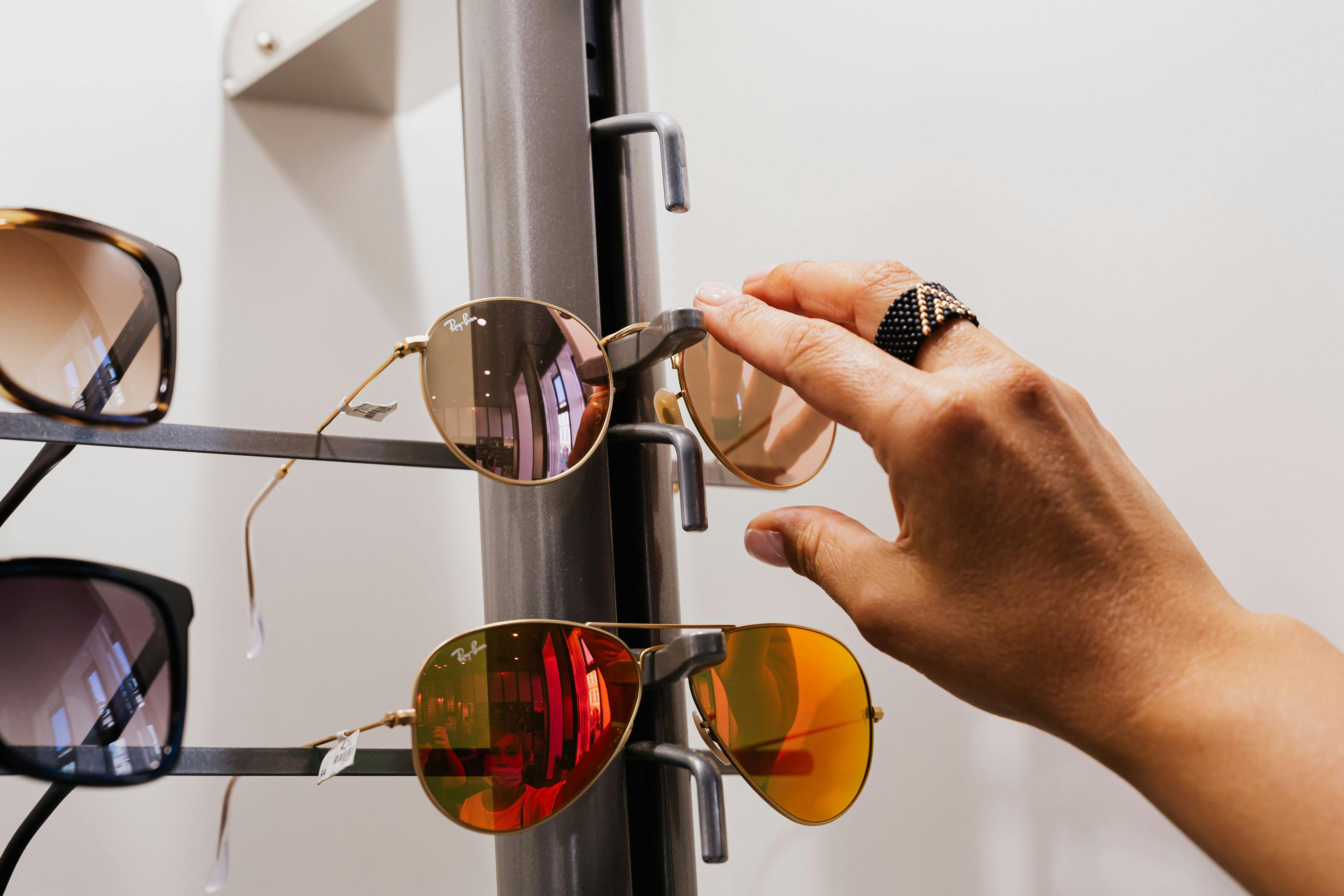
Aviator: The teardrop shape of a classic aviator is curved at the bottom and relatively straight at the top, which introduces curve without full circularity. Works well on square faces because the vertical drop of the lens softens the horizontal width of the jaw.
Browline: A frame that is heavier at the top and lighter at the bottom draws the eye upward and emphasizes the upper face. On a square face this can feel more flattering than frames that sit evenly, because it shifts attention away from the jaw.
Bold rectangular: As discussed — this works when the frame is correctly sized and worn with confidence. If you have strong features, do not be afraid of a strong frame.
What to be careful with
Frames that exactly mirror the jawline width: A frame that sits precisely at the edge of the jaw emphasizes its width. This is not inherently bad, but be aware that it reads differently than a frame that sits slightly inside that boundary.
Very small frames: On a large square face, a small frame can look mismatched in scale. The frame should feel proportionate to the face, not like it got lost.
Square frames: The identical-geometry issue — a perfectly square frame on a perfectly square face doubles the angularity. Some people carry this; most do not.
The fitting room test
Try a round frame and a bold rectangular frame in the same session. Compare. The response you have — which one feels more like you — is more reliable than any shape chart. Square faces frequently surprise themselves by preferring the bold rectangular option.
Trust what you see more than what the system predicts.