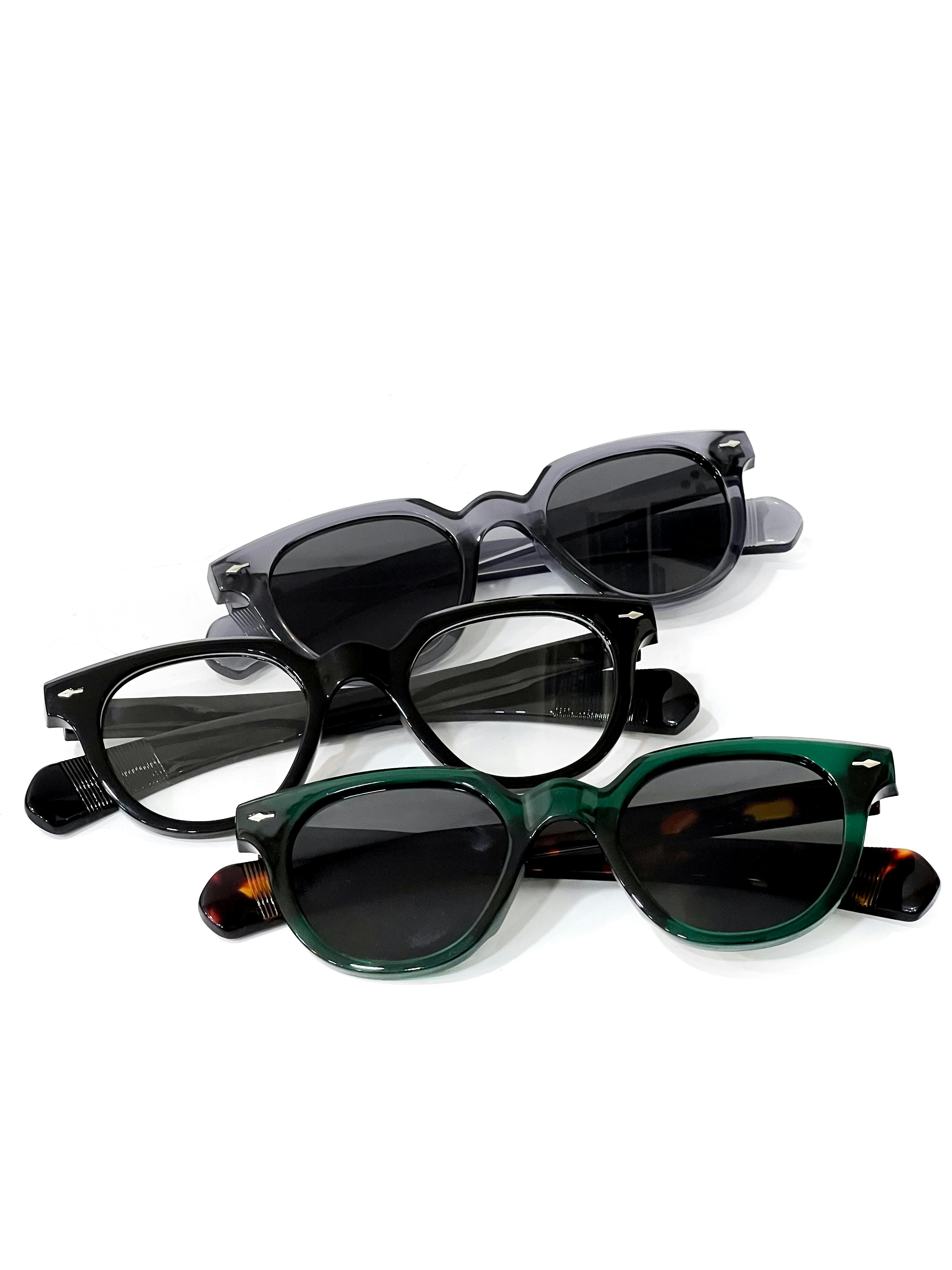
Every face shape guide on the internet follows the same formula: measure your forehead, measure your cheekbones, measure your jaw, consult a chart, and buy accordingly. It sounds scientific. It’s mostly useless.
The problem is that faces aren’t geometric shapes. Nobody is a perfect oval or a textbook square. Most people are somewhere in between, which makes rigid categorization more confusing than helpful.
Here’s a simpler approach that actually works.
Forget the labels, use contrast
The real principle behind flattering eyewear isn’t matching a category. It’s contrast. Frames should introduce something your face doesn’t already have.
If your features are predominantly angular, meaning a strong jaw, pronounced cheekbones, and a wider forehead, rounded frames create a counterbalance. They soften without feminizing. They add curve where there’s line.
If your features are softer, meaning rounded cheeks, a gentle jawline, and less defined bone structure, structured frames add definition. Square or rectangular shapes bring an edge that complements the natural softness.
This is the entire principle. Everything else is detail.
Width matters more than shape
The single most common mistake in sunglasses shopping is getting the width wrong. Frames that are too narrow make a wide face look wider. Frames that are too wide make a narrow face disappear behind them.
Your frames should roughly align with the widest part of your face. Not exactly, but close. A millimeter or two wider is fine and often looks intentional. But a significant mismatch in either direction is hard to pull off.
If you’re shopping online, measure a pair you already own across the front from hinge to hinge. That number, usually between 130mm and 145mm, is your reference point. Most quality eyewear brands list total frame width in their specs.
The bridge changes everything
The bridge, that small piece connecting the two lenses over your nose, has a disproportionate impact on how frames sit and look. A high bridge pushes the frames up your face, making your nose appear shorter and your eyes more prominent. A low bridge lets them sit lower, elongating the nose and creating a more relaxed feel.
People with wider nose bridges generally look better in frames with a wider keyhole bridge. People with narrower bridges tend to suit frames with a saddle bridge that distributes weight more evenly.
This is the kind of detail that most guides skip, but it’s often the difference between frames that feel right and frames that keep sliding down your face every ten minutes.
Color is personal, not prescriptive
You’ll read that warm skin tones should wear tortoiseshell and cool skin tones should wear black. This isn’t wrong exactly, but it’s overly rigid.
The better approach: hold frames up to your face in natural light. Do they make your skin look alive or washed out? Do they complement or compete with your hair color? Trust your eyes more than a chart. If a color feels right, it probably is.
Classic black works on almost everyone. Tortoiseshell is universally forgiving. Beyond those two, you’re in personal preference territory, and that’s where it gets fun.
The real test
After all the principles and guidelines, there’s one test that matters: put them on and look in the mirror for thirty seconds. Not two seconds. Thirty. Let your eyes adjust. Let the initial reaction settle.
If after thirty seconds you’re still looking at the frames instead of your face, they’re wrong. The right pair disappears into your look. You see yourself, just slightly sharper. That’s the goal.